


Benjamin Moore White Dove is a popular warm white paint color known for its soft, balanced appearance and versatility in residential interiors. Rather than looking stark or icy, it has subtle creamy undertones that help it feel comfortable in bedrooms, living rooms, kitchens, trim, and cabinetry. Its light, adaptable character allows it to work with both traditional and contemporary designs, although surrounding colors and lighting can noticeably affect how White Dove appears.
What Is Benjamin Moore White Dove?
Benjamin Moore White Dove is a soft, warm off-white from the Benjamin Moore color collection, identified as OC-17. It is commonly used when homeowners want a white that feels warmer and more inviting than a bright, cool white.
White Dove is not a pure, neutral white. Its subtle warmth gives painted surfaces a slightly creamy quality without making them strongly beige. This balance is one reason the color is frequently considered for walls, ceilings, trim, doors, cabinets, and built-in furniture.
The appearance can change considerably depending on natural light, artificial lighting, flooring, countertops, and nearby paint colors. For that reason, a sample viewed in the actual room is more reliable than judging the color from a small digital image.
Why Is White Dove Benjamin Moore So Popular?
White Dove is popular because it provides a softer alternative to stark white while remaining light enough to create an open appearance. Its restrained warmth can also help different materials and finishes feel more visually connected.
The color can complement many common interior materials, including natural wood, stone, brushed metal, painted cabinetry, and neutral textiles. It can also be used across multiple surfaces when a consistent color scheme is desired.
Another reason people consider White Dove is its flexibility. The same paint color can look slightly different in a north-facing room, a sunny south-facing room, or a space illuminated primarily by artificial light.
What Undertones Does Benjamin Moore White Dove Have?
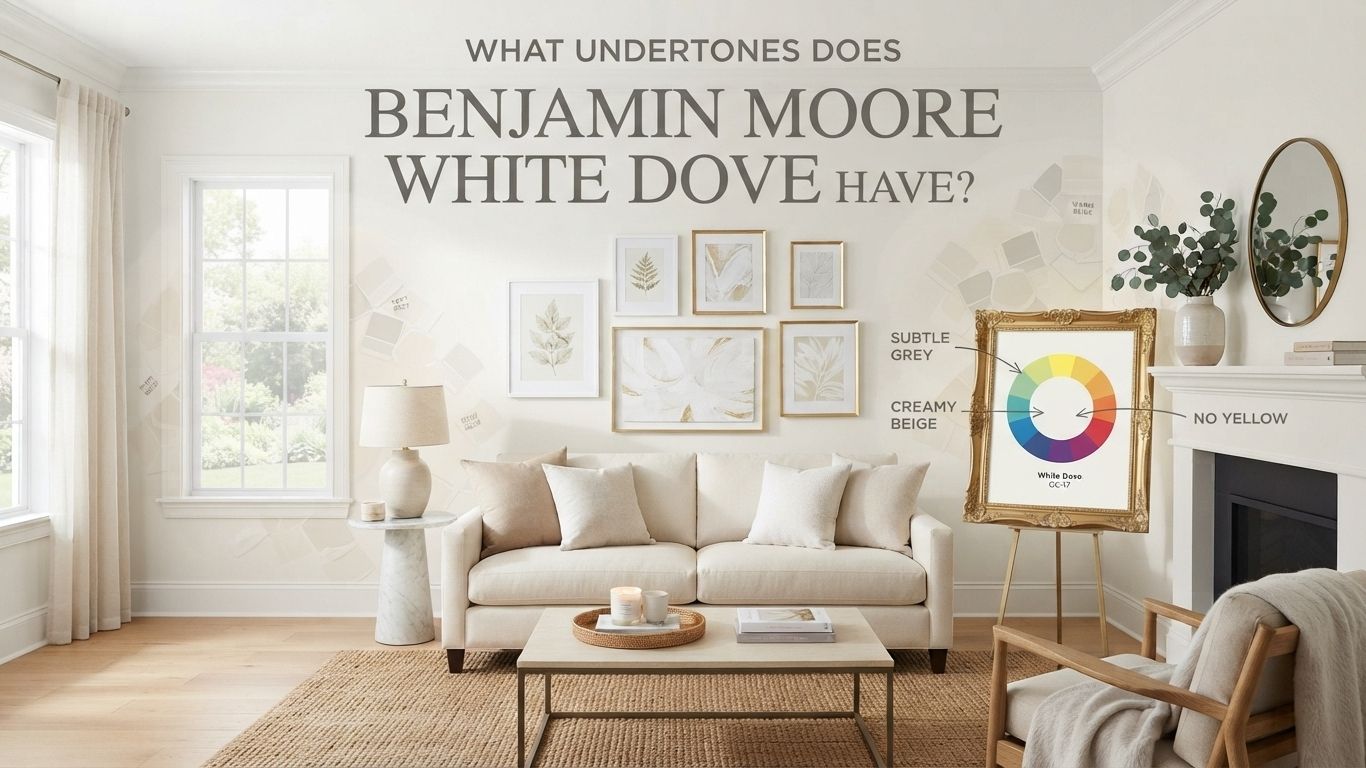
White Dove has warm, subtle undertones rather than appearing completely neutral. These undertones are generally perceived as creamy or slightly greige depending on the surrounding colors and lighting.
How Lighting Changes White Dove
Natural light can have a significant effect on the appearance of white paint. In a room with strong warm sunlight, White Dove may appear creamier, while cooler daylight can make its warmth less noticeable.
Artificial bulbs also matter. Warm-white bulbs can emphasize the creamy side of the color, whereas cooler bulbs may make it appear cleaner and less warm.
This is why two rooms painted with the same White Dove paint can appear noticeably different in photographs or in person.
Is White Dove a Warm or Cool White?
White Dove is generally considered a warm white, although its warmth is relatively restrained compared with strongly creamy or yellow whites.
This makes it useful for spaces where a homeowner wants softness without moving too far toward beige. However, whether it looks noticeably warm depends on the colors surrounding it.
For example, warm wood flooring can reinforce its warmth, while cool gray surfaces may make the white appear comparatively warmer by contrast.
What Is the Light Reflectance Value of White Dove?
Benjamin Moore White Dove has an LRV of approximately 85.4. LRV, or Light Reflectance Value, describes how much visible light a paint color reflects, with higher values generally representing lighter colors.
An LRV in the mid-80s places White Dove firmly in the light range. However, LRV should not be interpreted as a guarantee that a room will look bright because window size, orientation, shadows, finishes, and artificial lighting all influence perceived brightness.
White Dove can therefore work well in rooms that receive substantial natural light while still providing a softer appearance than an extremely bright white.
Where Can You Use Benjamin Moore White Dove?
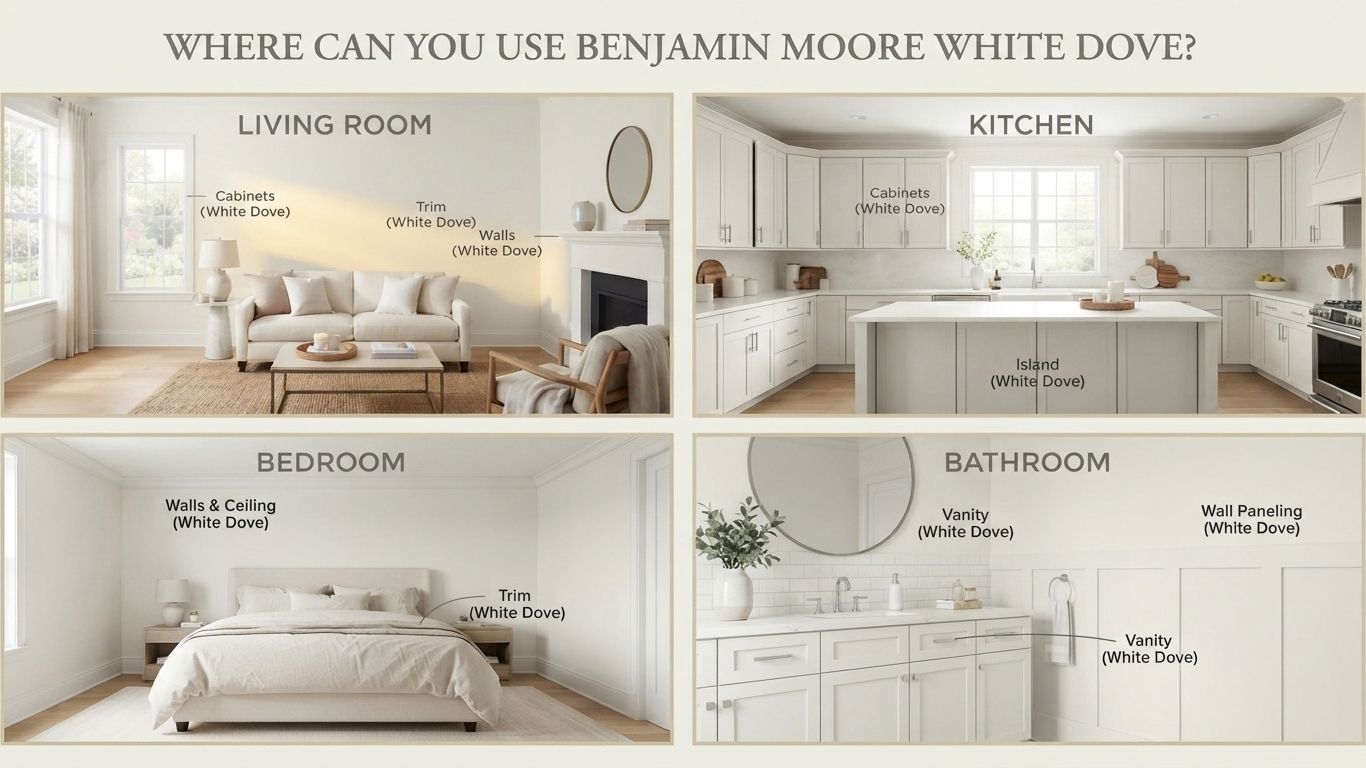
White Dove can be used on walls, trim, doors, cabinets, ceilings, and other architectural surfaces. The best application depends on the surrounding palette and the amount of light in the room.
White Dove on Walls
As a wall color, White Dove can create a calm, light background without the sharper contrast associated with very bright whites.
It can work particularly well with natural wood, warm neutrals, soft greens, muted blues, and other understated colors. In rooms with limited natural light, however, testing a sample is especially useful because the warm undertones may become more noticeable.
White Dove for Trim and Doors
White Dove can also be used for trim and interior doors, particularly when the walls are painted in compatible warm neutrals.
Using the same color on walls and trim can create a low-contrast, cohesive appearance. Alternatively, White Dove trim against a darker wall color can provide clearer architectural definition.
White Dove for Kitchen Cabinets
White Dove is frequently considered for kitchen cabinetry because it can soften the appearance of a kitchen without introducing a strongly colored cabinet finish.
The surrounding countertop, backsplash, flooring, and hardware should be evaluated together. A cool gray countertop, for example, can make the warmth of the cabinets more apparent.
What Colors Go Well With White Dove?
White Dove works with a broad range of colors because it occupies a light, relatively understated position in a palette. The most successful combinations depend on whether you want to emphasize its warmth or create more contrast.
Common complementary directions include:
- Warm wood tones for a natural and relaxed look
- Soft greens for an organic color palette
- Muted blues for gentle contrast
- Warm grays and greiges for a restrained neutral scheme
- Charcoal and deep gray for stronger contrast
- Natural stone colors for kitchens and bathrooms
- Black accents when a more defined modern look is desired
The key is to compare the actual colors together because undertones that look subtle individually can become obvious when placed side by side.
White Dove vs. Other White Paint Colors
White paint colors can look surprisingly different even when their names sound similar. Comparing undertones and lightness is therefore more useful than simply choosing the whitest-looking sample.
White Dove vs. Pure White
White Dove is generally warmer and creamier than a cleaner, cooler white such as Pure White. If you prefer a softer traditional white, White Dove may appear more comfortable; a cleaner white can create sharper contrast.
White Dove vs. Simply White
Benjamin Moore Simply White is another popular warm white, but the two colors should not be assumed to look identical. Simply White can appear brighter and cleaner in some environments, while White Dove tends to provide a somewhat softer visual effect.
White Dove vs. Chantilly Lace
Chantilly Lace is known for its clean, crisp appearance and is generally less creamy-looking than White Dove. White Dove is therefore often considered when a room needs more warmth.
Does White Dove Look Yellow?
White Dove can sometimes look slightly yellow or creamy, but this does not mean that it is a strongly yellow paint color.
Warm lighting, cream-colored furnishings, warm wood, and adjacent beige tones can make its warmth more visible. Conversely, cooler lighting and cool-toned furnishings can reduce the appearance of that warmth.
If you strongly dislike creamy whites, test White Dove on a large sample before committing to the color.
Does White Dove Look Gray?
White Dove can sometimes appear slightly gray or greige depending on the environment, but it is not generally classified as a gray paint color.
Cool surroundings can make the warm undertones appear less prominent, while shadows can reduce the amount of visible warmth. This explains why online photographs may show the color differently from a physical sample.
Is White Dove Good for a Small Room?
White Dove can work well in a small room because its high light reflectance can help maintain a light visual environment. However, paint color alone cannot compensate for a room with very limited natural or artificial lighting.
Using the color consistently across walls and trim can create a less visually fragmented appearance. Light-colored flooring, curtains, and furnishings can further support an airy effect.
For a small room with little daylight, test the color during both daytime and evening before making a final decision.
Is White Dove Good for North-Facing Rooms?
White Dove can be used in north-facing rooms, but the cooler, indirect daylight may change how its undertones are perceived.
Because north-facing light often appears cooler than direct southern light, White Dove may look less creamy and somewhat more muted. This can be desirable if you want a soft neutral appearance, but the result depends on the specific room.
A large sample positioned on different walls can show how the color responds to the room’s natural light.
How Should You Test Benjamin Moore White Dove?
The most reliable way to evaluate White Dove is to test it in the actual space before painting the entire room.
- Obtain a physical paint sample. Digital screens can distort color appearance.
- Apply the sample to a large surface. A small swatch may not reveal undertones clearly.
- Check it on different walls. Light direction can change the appearance.
- View it at different times of day. Morning, afternoon, and evening lighting may produce different results.
- Compare it with permanent finishes. Look at flooring, countertops, cabinets, furniture, and trim together.
- Evaluate artificial lighting. The color may look different under warm and cool bulbs.
This process is particularly useful with whites because subtle differences in undertone are easier to see across a large surface.
Common Mistakes When Choosing White Dove
One common mistake is assuming that every white will look neutral once it is on the wall. White Dove has warmth, and the surrounding environment can either emphasize or minimize it.
Another mistake is choosing the color from an online photograph alone. Photography, editing, screen settings, and room lighting can all change how paint appears.
A third mistake is comparing paint colors under different lighting conditions. If one sample is in direct sunlight and another is in shadow, the comparison may be misleading.
Frequently Asked Questions About White Dove Benjamin Moore
What is the Benjamin Moore White Dove color code?
Benjamin Moore White Dove is OC-17.
Is White Dove a true white?
White Dove is better described as a soft warm white rather than a stark or perfectly neutral white.
Is White Dove too creamy?
That depends on the room. Warm lighting and warm surrounding finishes can make its creamy quality more noticeable, so sampling is recommended.
Can White Dove be used throughout a house?
Yes. Its relatively flexible appearance allows it to be considered for multiple rooms and surfaces, provided its warmth works with the home’s existing finishes.
Is White Dove suitable for kitchen cabinets?
Yes, it can be used for kitchen cabinetry. Countertops, backsplash materials, flooring, and lighting should be evaluated alongside the cabinet sample.
Does White Dove work with gray?
It can work with gray, but the specific gray’s undertone matters. Cool grays may create more visible contrast with White Dove’s warmth, while warm grays can produce a more blended palette.
Final Thoughts on White Dove Benjamin Moore
White Dove Benjamin Moore is a soft, warm white that can provide a light and comfortable backdrop for walls, trim, doors, and cabinetry. Its OC-17 designation, relatively high LRV, and subtle warmth make it different from stark or cool whites, while its versatility allows it to work with many traditional and contemporary color schemes. Before choosing it, compare a large sample with your lighting, flooring, countertops, and furnishings.