

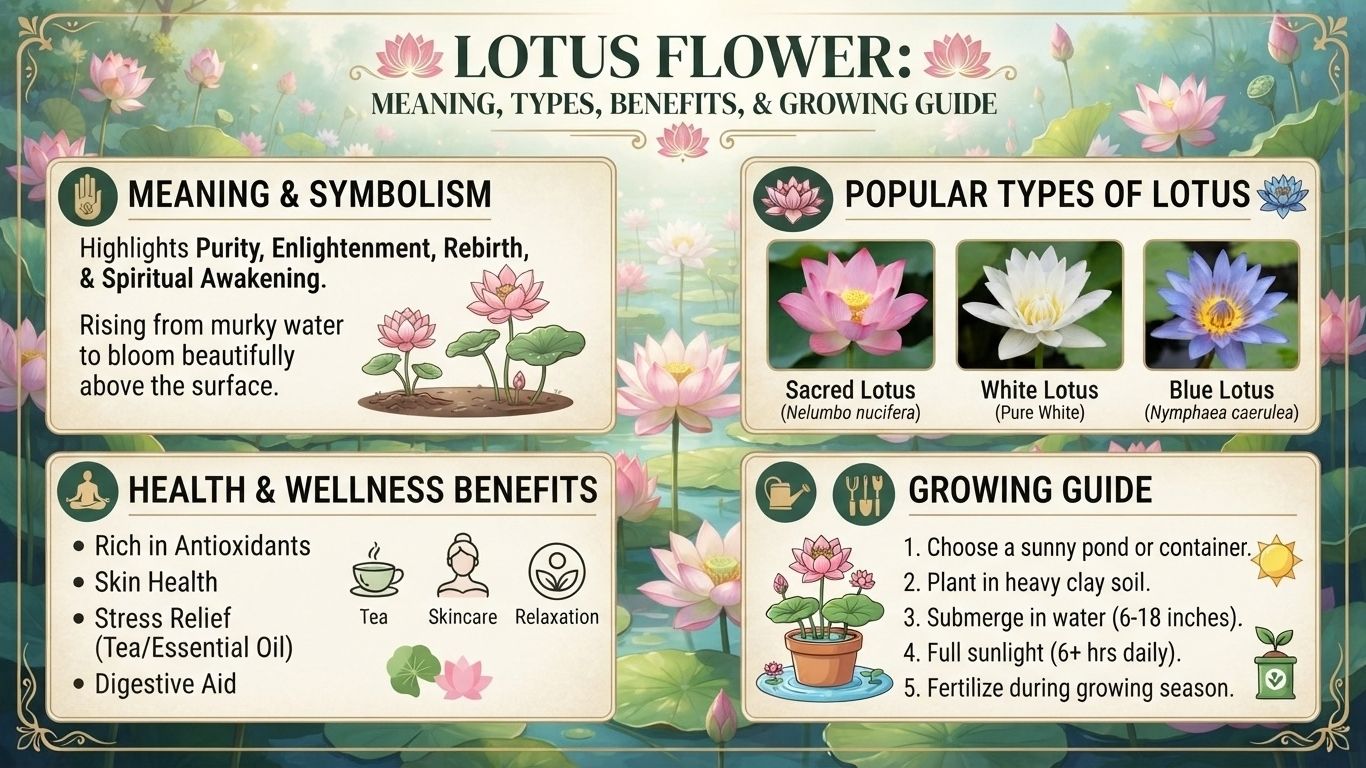
The lotus flower is an aquatic flowering plant best known for its large, elegant blooms, round leaves, and ability to grow from muddy ponds while producing clean-looking flowers above the water. Scientifically, the sacred lotus is Nelumbo nucifera, a species native to parts of Asia and widely cultivated elsewhere. Lotus flowers are valued for their beauty, cultural symbolism, edible parts, and ecological importance in freshwater environments.
What Is a Lotus Flower?
The lotus flower is a freshwater aquatic plant that grows from underground stems anchored in muddy pond or lake bottoms. Its flowers rise above the water on long stalks, while its distinctive leaves may float on the surface or stand above it.
The sacred lotus belongs to the genus Nelumbo, which is separate from water lilies despite their similar aquatic habitats. The plant has large circular leaves, prominent flowers, and a distinctive seed-bearing structure at the center of each bloom.
Lotus plants are perennial, meaning they can live for several years under suitable conditions. Their underground rhizomes store nutrients and allow the plant to regrow during favorable growing seasons.
What Does a Lotus Flower Look Like?
A lotus flower has broad petals arranged around a central seed structure, with leaves that are typically large, round, and water-resistant. Flower colors commonly include pink and white, although cultivated varieties can show additional shades and combinations.
Lotus Leaves
Lotus leaves are unusually water-repellent because of microscopic structures on their surfaces. Water tends to form droplets rather than spreading across the leaf, allowing dirt and particles to be carried away as droplets move.
This phenomenon is commonly called the lotus effect. It has attracted scientific interest because the plant’s naturally water-repellent surface has inspired research into self-cleaning materials and coatings.
Lotus Seeds
The central structure of a lotus flower contains multiple seed-producing compartments. Mature lotus seeds can remain viable for remarkably long periods under suitable conditions, and lotus seeds are also used as food in several Asian cuisines.
Lotus Rhizomes
The underground rhizome is an important part of the plant because it stores energy and produces new growth. Lotus rhizomes are also edible and are commonly used in dishes in countries including China, Japan, Korea, and India.
What Does the Lotus Flower Symbolize?
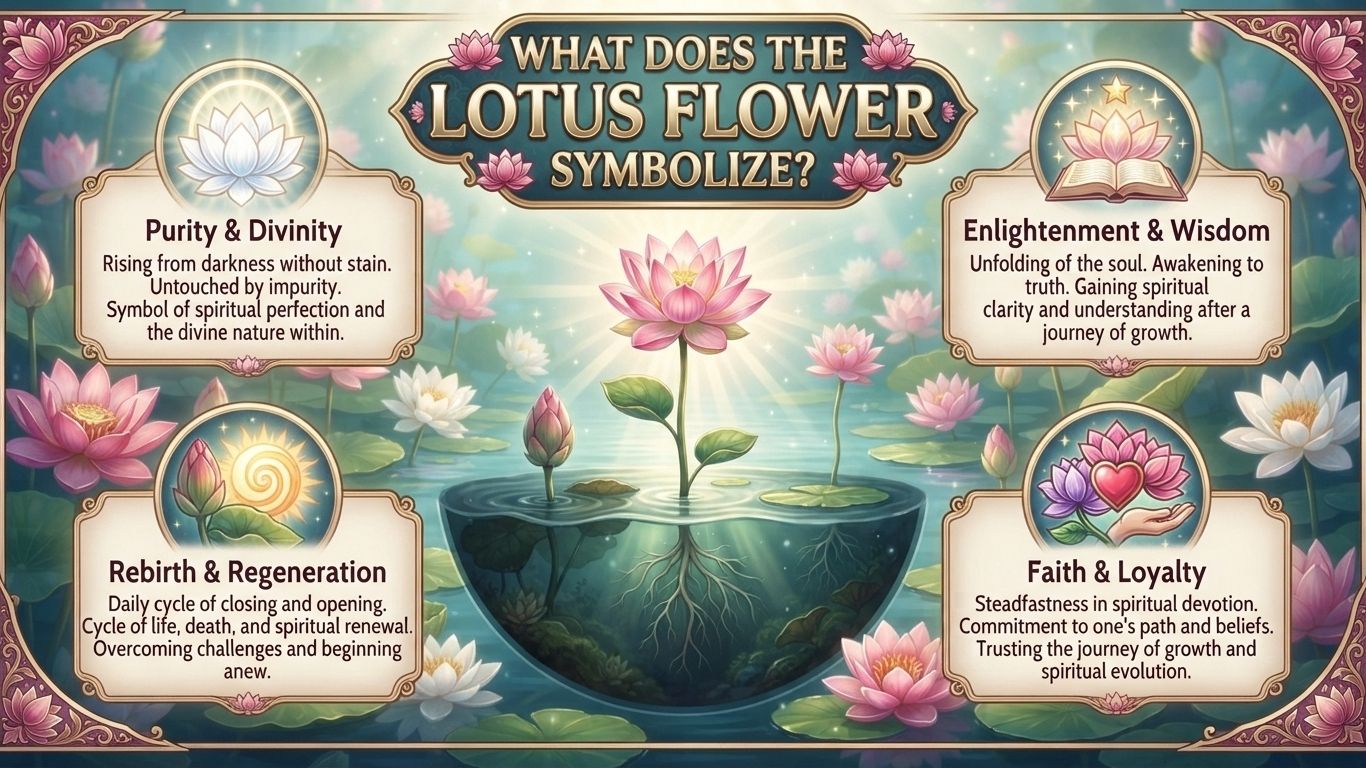
The lotus flower commonly symbolizes purity, resilience, renewal, and spiritual growth, although its meaning varies between cultures and religious traditions.
The flower’s association with purity partly comes from its growth pattern: lotus plants emerge from muddy water while their flowers appear clean and elevated above the surface. This natural characteristic has contributed to the flower’s powerful symbolic role.
Lotus Flower in Buddhism
In Buddhist traditions, the lotus is strongly associated with spiritual development, purity, enlightenment, and the journey from difficulty toward awakening. Different lotus colors can also carry different symbolic associations depending on the Buddhist tradition.
Lotus Flower in Hinduism
The lotus has an important place in Hindu traditions and is associated with several deities, including Lakshmi and Saraswati. It can represent purity, beauty, prosperity, knowledge, and spiritual consciousness.
Lotus Flower in Ancient Egypt
Ancient Egyptian art and symbolism prominently featured the blue lotus, which is generally identified with Nymphaea caerulea, a water lily rather than the Asian sacred lotus. This distinction is important because the two plants are often confused.
What Are the Main Types of Lotus Flowers?
The two principal living species traditionally recognized in the genus Nelumbo are the sacred lotus and the American lotus.
Sacred Lotus
The sacred lotus, Nelumbo nucifera, is native to broad areas of Asia and is the species most commonly associated with Buddhist and Hindu symbolism. It is cultivated for ornamental flowers as well as edible rhizomes and seeds.
American Lotus
The American lotus, Nelumbo lutea, is native to North America. It produces yellow flowers and large circular leaves and grows in shallow freshwater habitats.
Lotus vs. Water Lily
Lotuses and water lilies are different plants even though both grow in aquatic environments. Lotus flowers and leaves commonly rise above the water, while many water-lily species have leaves and flowers that float directly on the surface.
The position of the flower and leaves is therefore one useful way to distinguish a lotus from a typical water lily.
Where Do Lotus Flowers Grow?
Lotus plants naturally grow in shallow freshwater environments such as ponds, marshes, lakes, and slow-moving waterways.
The sacred lotus has a wide native distribution across Asia and has been cultivated far beyond its original range. It generally prefers warm conditions, abundant sunlight, nutrient-rich soil, and relatively shallow water.
In gardens, lotus plants are often grown in large containers, ornamental ponds, or purpose-built water gardens. Their roots and rhizomes need room to spread, while the leaves and flowers require sufficient sunlight for healthy development.
How Do You Grow a Lotus Flower?
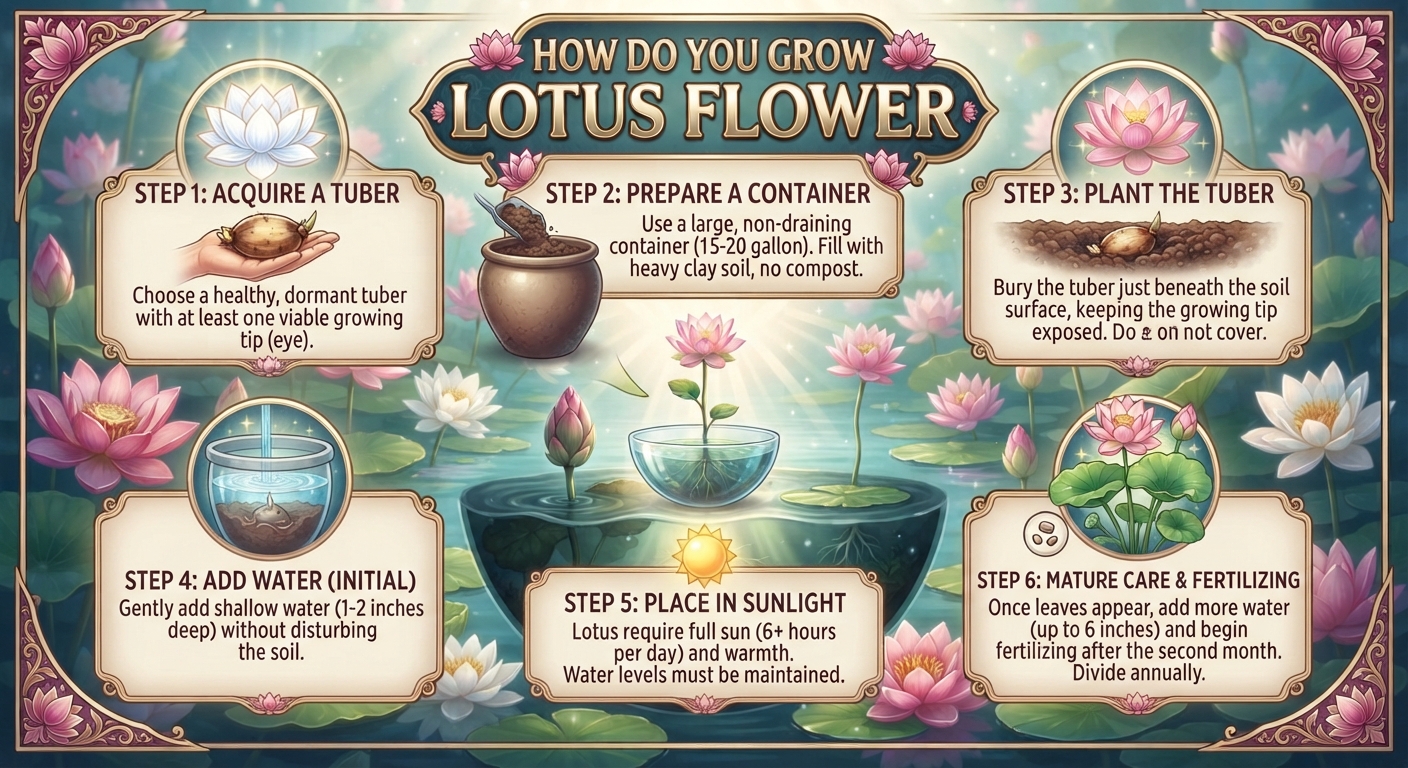
A lotus flower grows best when its rhizome is planted in heavy soil, placed in shallow water initially, and given plenty of sunlight as it develops.
1. Choose a Suitable Container
Use a wide, sturdy container without drainage holes if you are growing lotus as a container aquatic plant. Lotus rhizomes spread horizontally, so a wide container is generally more useful than a narrow, deep one.
2. Use Heavy Soil
Lotus plants are usually grown in heavy garden or aquatic soil rather than lightweight potting mix. Lightweight soil can float or become suspended in the water.
3. Position the Rhizome Carefully
Place the rhizome horizontally in the soil with the growing tip positioned so it can develop without being damaged. Avoid burying the growing tip too deeply.
4. Add Water Gradually
Keep the soil saturated and gradually increase the water level as the plant produces leaves and becomes established. Mature plants can tolerate substantially deeper water than newly planted rhizomes.
5. Provide Full Sun
Lotus generally performs best with several hours of direct sunlight each day. Strong sunlight supports leaf production and flowering.
6. Maintain the Plant
Remove damaged or dead leaves when appropriate and monitor the water for excessive algae or other problems. In suitable climates, established lotus plants can return year after year from their underground rhizomes.
Are Lotus Flowers Edible?
Several parts of the lotus plant are edible, including the rhizome, seeds, and certain young plant parts. Lotus is an established food plant in several Asian culinary traditions.
Lotus root is commonly sliced and cooked in stir-fries, soups, salads, and other dishes. Its appearance is distinctive because cross-sections typically contain multiple evenly spaced holes.
Lotus seeds can be eaten fresh, dried, or processed into ingredients used in desserts and savory foods. Lotus seeds are also used to make traditional pastes and other preparations.
Edibility does not mean every product labeled “lotus” comes from Nelumbo nucifera, so botanical identification matters when discussing food or traditional preparations.
Does the Lotus Flower Have Health Benefits?
Lotus has a long history of culinary and traditional use, but traditional uses should not automatically be interpreted as medically proven benefits.
Different parts of the plant contain compounds such as flavonoids, alkaloids, and other phytochemicals that have been investigated in laboratory and nutritional research. However, evidence for treating specific diseases in humans varies considerably by preparation and condition.
For ordinary dietary use, lotus root and seeds can be considered foods rather than substitutes for medical treatment. People using concentrated herbal preparations or supplements should consider potential interactions with medications and discuss them with a qualified healthcare professional.
Why Is the Lotus Flower Important to the Environment?
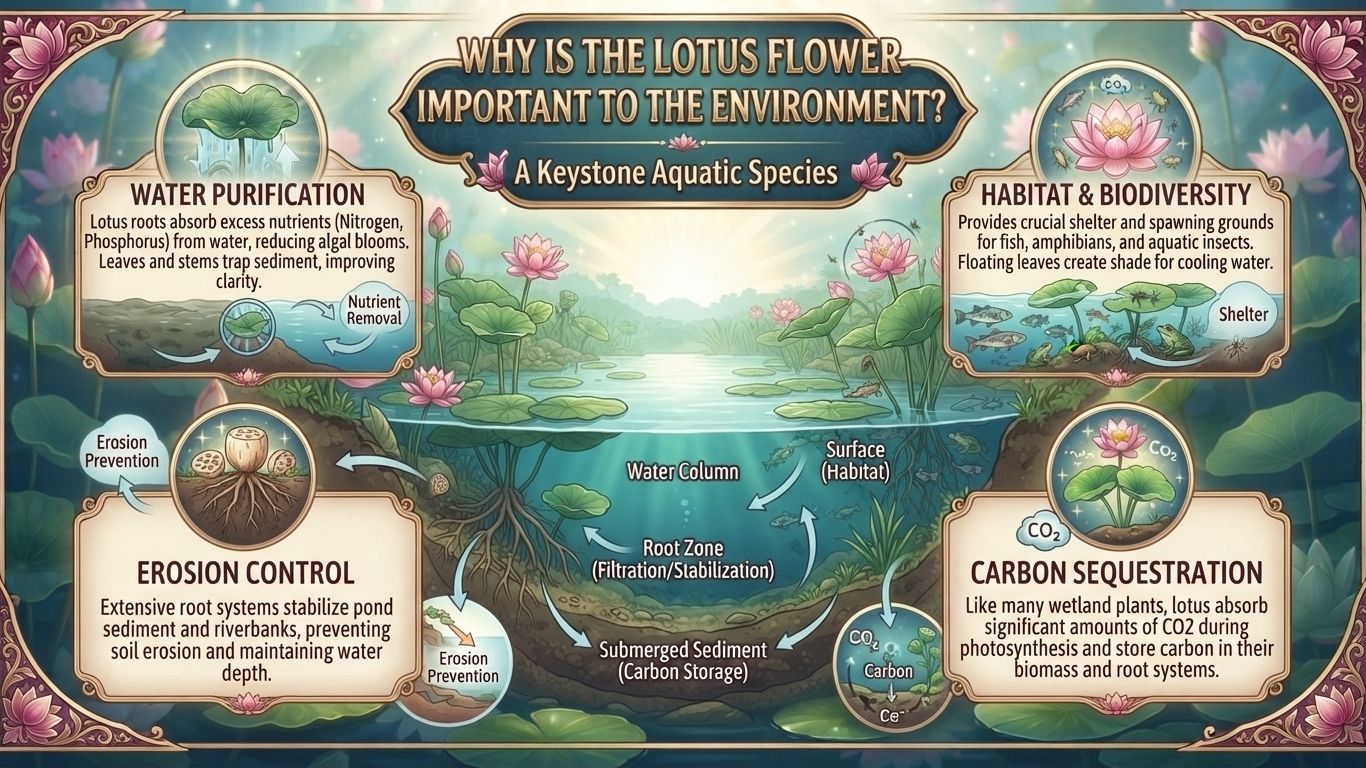
Lotus plants can provide habitat and structural cover for aquatic organisms while contributing to the biological complexity of shallow freshwater ecosystems.
Their leaves can shade portions of the water surface, and their stems, roots, and rhizomes create physical structure within aquatic habitats. However, dense growth can also become problematic in some managed waterways, particularly where an aquatic plant spreads beyond the desired area.
For this reason, lotus should be selected and managed carefully when introduced into ornamental ponds or other controlled environments.
Common Questions About Lotus Flowers
Why does the lotus grow in mud?
Lotus rhizomes naturally grow in soft, muddy or sediment-rich substrates at the bottom of shallow freshwater environments. The plant sends leaves and flowers upward toward the light.
How long does a lotus flower bloom?
Individual lotus flowers generally remain open for only a few days, although an established plant can produce flowers repeatedly during its flowering season. Exact timing depends on species, variety, climate, and growing conditions.
Does lotus flower need sunlight?
Yes. Lotus generally requires substantial direct sunlight for strong growth and reliable flowering. Insufficient light can result in weaker growth and fewer flowers.
Is lotus a water lily?
No. Lotus and water lilies are different plants. Lotus belongs to the genus Nelumbo, whereas true water lilies belong to the family Nymphaeaceae.
Can lotus flowers grow in pots?
Yes. Lotus can be grown successfully in large containers without drainage holes, provided the container, soil, water depth, sunlight, and climate are appropriate.
Conclusion
The lotus flower is a remarkable aquatic plant valued for its distinctive blooms, water-repellent leaves, edible parts, ecological role, and deep cultural symbolism. From the sacred lotus Nelumbo nucifera of Asia to the American lotus Nelumbo lutea, lotus species have adapted to freshwater environments while becoming important plants in gardens, cuisine, art, and religious traditions. Related topics worth exploring include water lilies, lotus symbolism, lotus root, and aquatic gardening.