

When most people hear the word “lawyer,” they picture courtroom battles, heated arguments, and judges banging their gavels. But did you know that a huge portion of legal work happens outside of criminal trials? That’s where civil lawyers come in. They quietly solve everyday disputes—often the ones that affect your life, money, property, or relationships.
Whether you’re dealing with a contract issue, a family conflict, a property dispute, or you simply want to understand your legal rights, knowing what a civil lawyer does can make a huge difference. This article breaks everything down in simple, relatable language—no jargon, no confusing legal talk.
Understanding the Role of a Civil Lawyer
Civil lawyers help people resolve non-criminal disputes. Think of them as legal problem-solvers for everyday life. Instead of focusing on crimes and punishments, they deal with disagreements between individuals, families, or companies. If criminal law is about proving guilt, civil law is about finding fair solutions.
What Exactly Does a Civil Lawyer Do?
1. They Handle Non-Criminal Legal Disputes
Civil lawyers step in whenever a conflict involves rights, responsibilities, or money—without any crime involved. Examples include:
Property disagreements
Contract issues
Tenant-landlord conflicts
Business disputes
Divorce or child custody issues
Compensation claims
They aim to resolve these matters peacefully and professionally.
2. They Offer Legal Advice
A big part of their job involves explaining your rights, laying out possible outcomes, and guiding you through the legal process. Most people don’t know which laws apply to their situation—and that’s exactly why civil lawyers exist.
3. They Prepare Legal Documents
From contracts to petitions, affidavits, wills, and settlement agreements, civil lawyers ensure everything is legally sound and enforceable.
4. They Negotiate Settlements
Believe it or not, most civil disputes never reach the courtroom. Civil lawyers often negotiate resolutions that save clients time, money, and stress.
5. They Represent Clients in Court (If Needed)
If a case does go to trial, they stand beside you, presenting evidence, cross-examining witnesses, and arguing on your behalf.
When Do You Actually Need a Civil Lawyer?
Life has a way of throwing unexpected situations at us. Here are moments when a civil lawyer becomes essential.
Property or Ownership Disputes
Whether it’s unclear boundaries, co-ownership issues, or disagreements with neighbours, civil lawyers handle real estate-related conflicts with precision.
Family-Related Issues
Family matters can get emotional, but legal clarity is crucial. Civil lawyers assist with:
Separation
Divorce
Child custody
Alimony
Adoption
They ensure fairness and protect your best interests.
Business Conflicts
Running a business? You’ll eventually face disagreements with partners, suppliers, or clients. A civil lawyer helps you handle commercial disputes peacefully and professionally.
Contract Issues
Contracts control almost every aspect of life—from jobs to services, leases, and purchases. When something goes wrong, civil lawyers step in to interpret the agreement or enforce it.
Financial or Compensation Claims
If someone owes you money or caused you financial loss, a civil lawyer helps you recover what you deserve.
Different Types of Cases Handled by Civil Lawyers
Civil law is a massive umbrella. Let’s look at the major categories so you know exactly how they can help.
1. Family Law
This includes:
Divorce
Custody battles
Maintenance
Domestic partnerships
Property distribution
Family law requires both legal knowledge and empathy—qualities civil lawyers often balance well.
2. Contract Law
Civil lawyers ensure contracts are:
Clear
Fair
Binding
And if agreements are broken, they guide clients through breach-of-contract claims.
3. Property & Real Estate Law
Disputes can include:
Boundary lines
Ownership disagreements
Landlord-tenant issues
Property sale failures
4. Torts (Civil Wrongs)
These are cases where someone caused harm—physical, emotional, or financial—without committing a crime. Examples include:
Defamation
Personal injury
Negligence
5. Corporate & Commercial Law
Includes partnership disputes, compliance issues, and business-to-business conflicts.
6. Employment Law
Civil lawyers help with disputes related to:
Wrongful termination
Workplace discrimination
Salary disputes
Contractual agreements
How Does a Civil Lawyer Work on a Case? Step-by-Step Process
Every civil case may look different, but most follow a similar structure.
1. Initial Consultation
This is where you explain your situation. The lawyer listens, evaluates your case, and suggests the best legal approach.
2. Gathering Evidence
This includes:
Documents
Contracts
Photos
Witness statements
Emails or messages
The stronger your evidence, the better your outcome.
3. Negotiation & Mediation
The lawyer tries to settle the matter outside of court to save time and money.
4. Filing a Lawsuit (If Needed)
If negotiations fail, your civil lawyer formally files the case.
5. Court Representation
Your lawyer presents your case:
Examining documents
Questioning witnesses
Making legal arguments
Protecting your rights
6. Settlement or Judgment
The case ends with either a negotiated settlement or a court-ordered decision.
Why Civil Lawyers Are Important

Think of civil lawyers as the glue that holds society together. They keep disputes from spiraling out of control. Their work ensures fairness, justice, and peaceful resolution.
Here’s why they matter:
They Protect Your Rights
Most people don’t know their legal rights. Civil lawyers make sure you aren’t taken advantage of.
They Provide Clarity
Legal language can be confusing. Civil lawyers simplify it so you fully understand what’s happening.
They Save Time and Money
Going to court alone can lead to expensive mistakes. A good lawyer keeps your case on track and avoids unnecessary delays.
They Negotiate Better Settlements
Lawyers know how to negotiate. That skill often leads to outcomes you wouldn’t get on your own.
They Reduce Stress
Legal battles can be emotionally draining. Having someone guide you through every step brings peace of mind.
How to Choose the Right Civil Lawyer
Choosing the right person to represent you is crucial. Here’s what to look for:
1. Experience in the Specific Type of Case
A family dispute differs from a property conflict. Choose someone who specializes in your issue.
2. Good Communication Skills
You want someone who listens—and explains things in a simple way.
3. Transparent Fees
Always ask:
What do they charge?
Are there additional costs?
Do they offer payment plans?
4. Strong Negotiation Ability
Most civil cases are resolved through negotiation, so this is vital.
5. A Comfortable Working Relationship
You’ll share personal details, so trust and comfort matter.
How Much Does a Civil Lawyer Cost?
Legal fees can vary widely depending on:
Location
Complexity of the case
Experience of the lawyer
Time spent
Court involvement
Common Billing Methods
Hourly rate – typical for ongoing cases
Fixed fee – for simpler tasks like drafting contracts
Retainer – upfront payment to secure services
Percentage-based – occasionally used for compensation claims
Think of hiring a civil lawyer like investing in an expert mechanic—fixing the issue early usually saves more trouble later.
Common Myths About Civil Lawyers
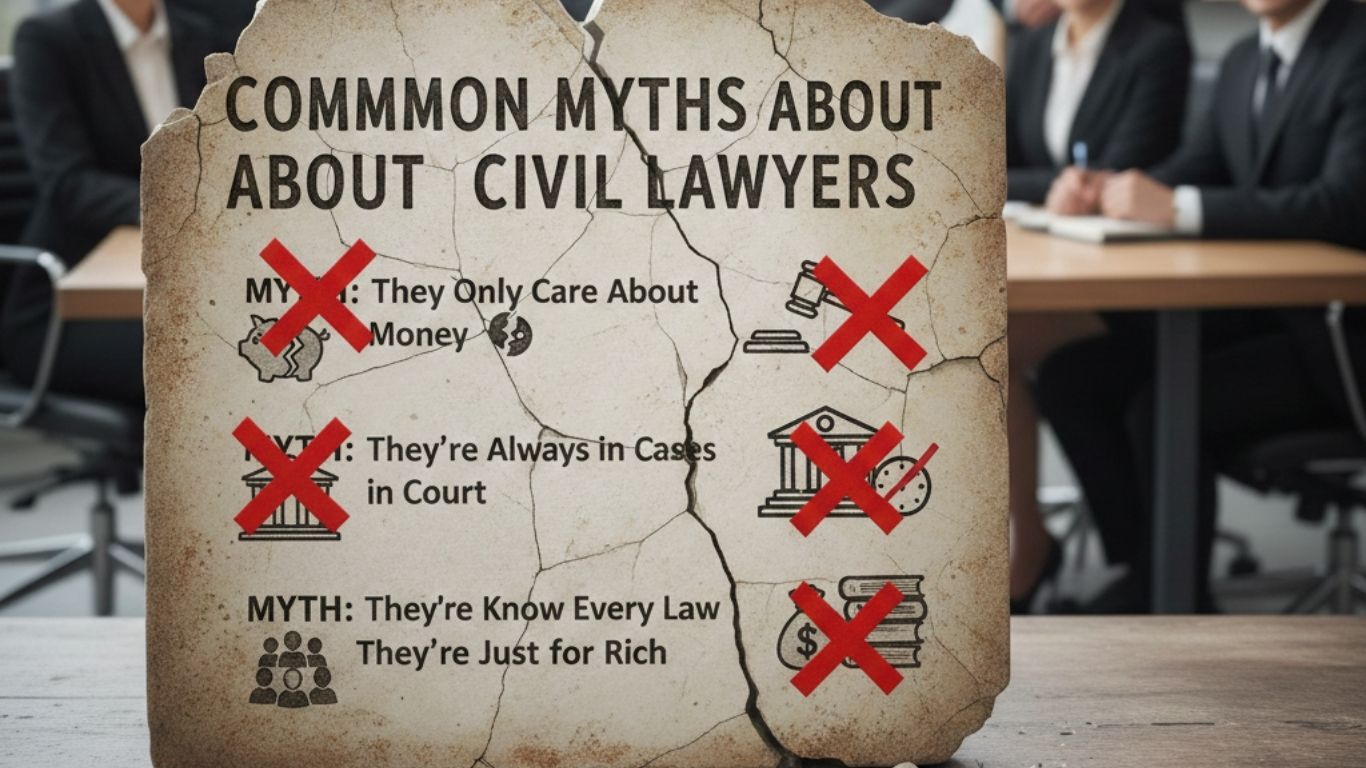
Let’s clear up some misconceptions.
“Only rich people hire civil lawyers.”
Not true. Many lawyers offer affordable fees, instalments, or legal aid options.
“Civil cases always take years.”
Many disputes are settled within weeks or months through negotiation.
“Lawyers just want to take cases to court.”
Most civil lawyers prefer settling outside court because it’s quicker and cheaper for clients.
“You can easily handle a civil case without a lawyer.”
Possible? Yes. Wise? Often not. One mistake in a legal document can change the entire outcome.
The Difference Between Civil and Criminal Lawyers
Understanding the difference helps you know who to contact.
Civil Lawyer
Handles disputes
Seeks compensation or solutions
Deals with private matters
Criminal Lawyer
Handles crimes
Defends or prosecutes accused persons
Focuses on guilt or innocence
A simple analogy:
If criminal lawyers are firefighters tackling emergencies, civil lawyers are plumbers fixing everyday leaks before they become disasters.
Benefits of Hiring a Civil Lawyer Early
Many people wait until things get messy. But early legal guidance can:
Prevent conflicts
Protect your rights
Save time
Reduce financial damage
Provide strong documentation
Help you avoid costly mistakes
Think of legal advice as preventive maintenance—just like servicing your car before the engine breaks.
FAQs
1. What types of cases do civil lawyers handle the most?
They commonly handle family matters, property disputes, contract issues, business conflicts, and compensation claims.
2. Do civil lawyers go to court?
Yes, but only when necessary. Most cases are settled privately through negotiation.
3. How long does a typical civil case take?
It depends on the complexity, but many cases can be settled within a few weeks or months.
4. Can I handle a civil dispute without hiring a lawyer?
You can, but it’s often risky. Legal documents and processes can be complicated, and one error can weaken your case.
5. How do I find a trustworthy civil lawyer near me?
Look for experience, transparent fees, communication skills, and positive client reviews. Personal recommendations also help.
Conclusion
Civil lawyers play an important role in solving real-life conflicts that affect everyday people. From property disputes to family matters, contracts, business disagreements, and compensation claims, they guide you through complex legal processes with clarity and compassion. Whether you’re facing a dispute or want to prevent one, understanding how civil lawyers work empowers you to make informed decisions.
They are more than legal professionals—they’re problem-solvers who help restore balance, fairness, and peace in day-to-day life.